
Men’s Health Month: What Every Man Should Know About Cancer Screenings
June 17, 2026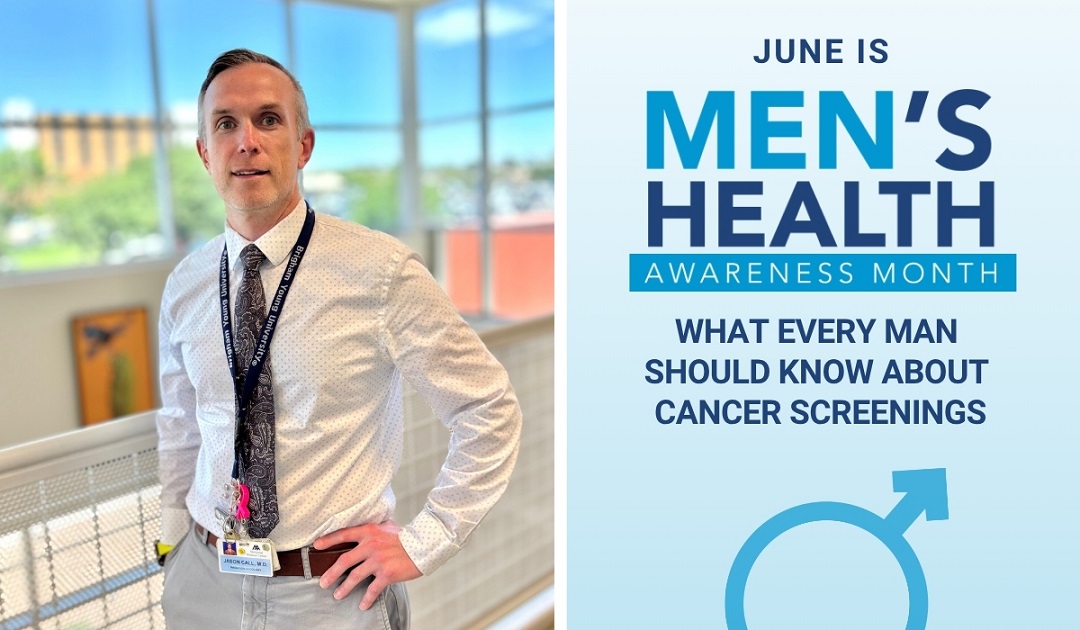
By Jason A. Call, MD
Medical Director of Radiation Oncology, Memorial Radiation Oncology
Chief of Staff, Memorial Medical Center
June is Men’s Health Month — a time to focus on the steps men can take to protect their health. Cancer remains one of the leading causes of death among men in the United States, but the good news is that the three most common cancers in men — prostate, lung, and colorectal — can often be caught early through screening, and many risk factors are within your control.
Together, these three cancers account for nearly half of all new cancer diagnoses in men each year. Here’s what you should know about each one.
(A note on skin cancer: You may have heard that skin cancer is the most common cancer overall — and that’s true. But because non-melanoma skin cancers are so common and rarely life-threatening, they are tracked separately from other cancers. That’s why prostate, lung, and colorectal are listed as the “top 3.” I’ve included an important section on skin cancer below, because it absolutely deserves your attention — especially for men.)
Prostate Cancer: The Most Common Cancer in Men
Prostate cancer accounts for about 1 in 3 cancer diagnoses in men. The prostate is a small gland below the bladder that produces fluid for semen. Most prostate cancers grow slowly and may never cause serious harm, but some can be aggressive.
Who is at higher risk?
- Men over age 50
- Black/African American men (who have roughly twice the risk)
- Men with a father, brother, or son diagnosed with prostate cancer
- Men with certain inherited gene changes (such as BRCA2)
What are the symptoms?
Early prostate cancer usually has no symptoms at all. That’s why screening matters. Some men may notice difficulty urinating or frequent nighttime urination, but these symptoms are more commonly caused by a non-cancerous enlarged prostate.
How is it screened?
Screening is done with a simple PSA blood test, sometimes combined with a physical exam. The key point: talk to your doctor about whether screening is right for you. This is called “shared decision-making” — you and your doctor weigh the benefits and risks together.
When to start the conversation:
- Age 50 for most men
- Age 45 if you are Black/African American or have a close family member diagnosed with prostate cancer before age 65
- Age 40 if you have multiple close relatives with prostate cancer
How often? Every 1 to 4 years, depending on your PSA level and risk factors. Your doctor will help determine the right schedule for you.
Lung Cancer: The Deadliest Cancer in Men
While lung cancer is the second most common cancer in men, it is the number one cancer killer — causing more deaths than prostate and colorectal cancer combined. The reason: it is often found at a late stage. But screening can change that.
Who is at higher risk?
- Current smokers or former smokers
- Men with a 20 pack-year or greater smoking history (for example, 1 pack per day for 20 years, or 2 packs per day for 10 years)
- Men exposed to radon, asbestos, or other workplace chemicals
- Men with a family history of lung cancer
What are the symptoms?
Early lung cancer often has no symptoms. When symptoms do appear, they may include a persistent cough, coughing up blood, shortness of breath, chest pain, or unexplained weight loss. Don’t wait for symptoms — if you qualify, get screened.
How is it screened?
Screening is done with a yearly low-dose CT scan (LDCT) — a quick, painless scan of the chest that takes just a few minutes.
Who should be screened?
- Adults aged 50 to 80
- Who have a 20 pack-year or greater smoking history
- Who currently smoke or formerly smoked
Important: Even if you quit smoking years ago, you may still qualify. The American Cancer Society recommends that former smokers remain eligible for screening regardless of how long ago they quit.
If you currently smoke, it is never too late to quit. Quitting at any age reduces your risk of lung cancer and improves your overall health. Ask your doctor about resources to help you quit.
Colorectal Cancer: Highly Preventable With Screening
Colorectal cancer — cancer of the colon or rectum — is the third most common cancer in men. The great news is that screening can actually prevent this cancer, not just find it early. That’s because screening can detect and remove precancerous growths (called polyps) before they ever become cancer.
Who is at higher risk?
- Men over age 45
- Men with a family history of colorectal cancer or polyps
- Men with inflammatory bowel disease (Crohn’s disease or ulcerative colitis)
- Men who smoke, drink alcohol heavily, are overweight, or eat a diet high in red and processed meats
What are the symptoms?
Early colorectal cancer often has no symptoms. Warning signs can include blood in the stool, a change in bowel habits (such as new constipation or diarrhea lasting more than a few days), unexplained weight loss, or ongoing abdominal discomfort. Iron deficiency anemia can also be a sign. If you notice any of these, see your doctor promptly — don’t assume it’s just hemorrhoids.
How is it screened?
There are several effective options. Talk to your doctor about which is best for you:
- Colonoscopy — every 10 years (the most thorough option; polyps can be removed during the procedure)
- Stool-based tests:
- FIT (fecal immunochemical test) — a simple at-home test, done every year
- Stool DNA test (such as Cologuard) — an at-home test, done every 3 years
- Other options include flexible sigmoidoscopy and CT colonography
The most important thing is to get screened — the best test is the one you actually complete.
When to start: Age 45 for average-risk men. If you have a family history of colorectal cancer, you may need to start earlier and be screened more often.
A Word About Breast Cancer in Men
Most people think of breast cancer as a disease that only affects women. But men can get breast cancer too — and many don’t realize it until it’s too late.
Male breast cancer is uncommon, accounting for about 1% of all breast cancers, but it does happen. Because men aren’t looking for it, it is often diagnosed at a later stage. On a personal note, my own father was diagnosed with breast cancer — a reminder that this disease can affect men as well as women.
Who is at higher risk?
- Men over age 60
- Men with a family history of breast cancer (male or female)
- Men who carry BRCA1 or BRCA2 gene mutations
- Men with conditions associated with higher estrogen levels, such as obesity or Klinefelter syndrome
- Men who have had radiation to the chest
The bottom line: If you notice a lump, thickening, or any change in your chest or breast area, don’t ignore it. Tell your doctor. It may be nothing — but it’s always worth checking.
Skin Cancer: The Most Common Cancer You Might Not Think About
Skin cancer is actually the most common cancer in the United States — by far. An estimated 5 million cases of non-melanoma skin cancer (basal cell and squamous cell carcinoma) are treated each year, and over 100,000 Americans are diagnosed with melanoma annually. The reason it’s not in the “top 3” list above is that the most common types are rarely fatal and are tracked separately from other cancers. But skin cancer still deserves serious attention — especially for men.
Why men? Men have consistently higher rates of all types of skin cancer than women. Men are also less likely to use sunscreen, wear protective clothing, or perform regular skin checks. And melanoma — the most dangerous form of skin cancer — causes more than 8,000 deaths in the United States each year.
Who is at higher risk?
- Men with fair skin, light hair, or light eyes
- Men with a history of sunburns, especially blistering sunburns in childhood
- Men who spend significant time outdoors (work or recreation)
- Men over age 50 (risk increases with age)
- Men with many moles or atypical moles
- Men with a personal or family history of skin cancer
- Anyone who has used indoor tanning beds
What should you watch for?
Know the ABCDEs of melanoma — warning signs in a mole or skin spot:
- A — Asymmetry (one half doesn’t match the other)
- B — Border (irregular, ragged, or blurred edges)
- C — Color (uneven color — shades of brown, black, red, white, or blue)
- D — Diameter (larger than a pencil eraser, about 6 mm)
- E — Evolving (changing in size, shape, or color)
Also watch for any new spot that looks different from your other moles, or any sore that doesn’t heal.
Is there a screening test?
Currently, there is no routine screening recommendation for the general population. The U.S. Preventive Services Task Force says there is not yet enough evidence to recommend for or against routine skin cancer screening by a doctor for people without symptoms. However, if you have risk factors — fair skin, history of sunburns, many moles, or a family history of melanoma — talk to your doctor or a dermatologist about whether regular skin exams are right for you.
How to protect yourself:
- Use sunscreen with SPF 30 or higher (broad-spectrum, UVA/UVB protection) on exposed skin, and reapply every 2 hours
- Wear a wide-brimmed hat, sunglasses, and protective clothing when outdoors
- Seek shade during peak sun hours (10 AM to 4 PM)
- Never use indoor tanning beds
- Check your skin regularly — get to know your moles and spots so you notice changes
- See a doctor promptly if you notice anything suspicious
An Emerging Cancer Risk for Men: HPV-Related Throat Cancer
Human papillomavirus (HPV) is best known for causing cervical cancer, but many people are surprised to learn that it is also responsible for most cancers of the tonsils and base of the tongue in the United States. In fact, HPV-related throat cancer has become one of the most common HPV-associated cancers in men.
Unlike many other cancers, HPV-related throat cancer often develops years or even decades after exposure to the virus. Many patients have no traditional risk factors such as smoking or heavy alcohol use.
Common symptoms may include:
- A lump in the neck
- Persistent sore throat
- Difficulty swallowing
- Ear pain
- A change in voice that does not go away
The HPV vaccine is a powerful cancer-prevention tool. It is routinely recommended for boys and girls beginning at age 11 or 12 and can significantly reduce the risk of HPV-related cancers later in life.
If you have persistent symptoms involving your throat, voice, or neck, discuss them with your healthcare provider.
What You Can Do Today to Lower Your Cancer Risk
While you can’t change your age or family history, research shows that nearly half of all cancer cases and deaths are linked to factors you can control. Here are evidence-based steps every man can take:
1. Don’t smoke — and if you do, quit. Smoking is the single largest preventable cause of cancer, responsible for nearly 1 in 3 cancer deaths in men. It increases the risk of lung, colorectal, and many other cancers.
2. Maintain a healthy weight. Being overweight or obese increases the risk of several cancers, including colorectal cancer.
3. Stay physically active. Aim for at least 150 to 300 minutes of moderate activity per week (such as brisk walking) or 75 to 150 minutes of vigorous activity. Regular exercise is linked to lower risks of colon cancer and may help reduce prostate cancer risk.
4. Eat a healthy diet. Focus on vegetables, fruits, whole grains, and beans. Limit red meat to less than 18 ounces per week, and avoid processed meats like hot dogs, bacon, and deli meats. Processed meat consumption is directly linked to increased colorectal cancer risk.
5. Limit alcohol. It is best to avoid alcohol entirely. If you do drink, limit intake to no more than 2 drinks per day. Even moderate drinking increases the risk of several cancers.
6. Protect your skin. Use sunscreen daily on exposed skin, wear protective clothing and hats, avoid tanning beds, and check your skin regularly for changes.
7. Get screened on schedule. Early detection saves lives. Talk to your doctor about which screenings are right for you based on your age and risk factors.
The Bottom Line
Prostate, lung, and colorectal cancers are common — but they don’t have to be deadly. Screening catches cancer early, when treatment is most effective, and in the case of colorectal cancer, screening can actually prevent cancer from developing in the first place. Skin cancer is the most common cancer overall, and men are at higher risk — but simple sun-safety habits can make a big difference. And remember — men can get breast cancer too. Don’t ignore a lump.
This Men’s Health Month, take charge of your health. Talk to your doctor about cancer screening and what you can do to lower your risk. A few simple conversations and tests could save your life.
This article is for informational purposes only and does not replace medical advice from your physician.